

Every Friday, I put out a free column that everyone can read. This week, I want to talk about AI music. Is AI music “art?” What does it mean if you enjoy music that was created, not by a person, but by a… what, an algorithm? A machine? And what are the implications for the music industry?
None of it is good, let me tell you. The reason why is simple: I, Phil Elmore, have no music talent. I can’t carry a tune. I can sing within a very limited range, but I can’t play an instrument. I played saxophone in Junior High and during my freshman year in high school, but I’ve forgotten how to read music. Were I to join a band, I couldn’t even be the drummer. (“You know what they call people who hang out with musicians? Drummers!”)
But as of today, Friday, 11 September, 2026, I have multiple albums on every music service.
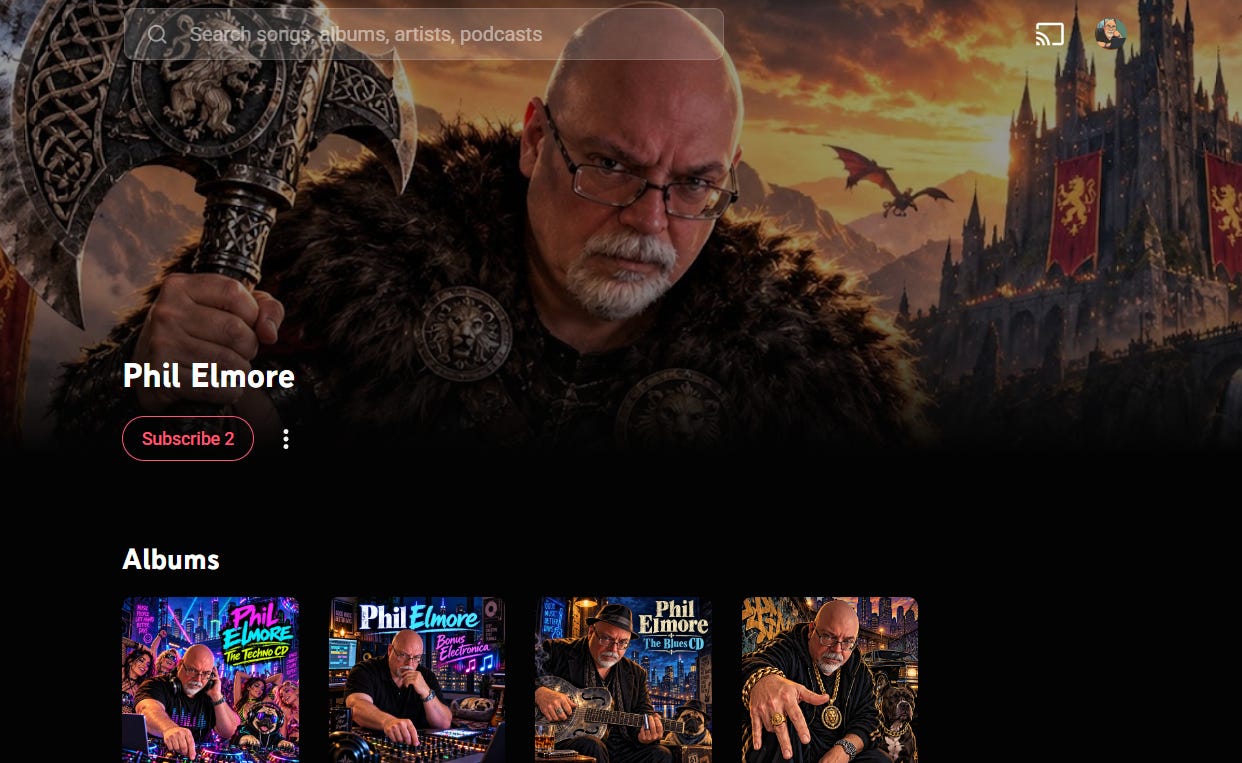
This is possible only through AI. Again, this poses a question: Is it music? Is it good? And if it is good — if I’m enjoying music that came into being because I poked a series of algorithms or robots or mechanisms… does that mean I have no soul?
How it Started
This all started because I wanted music to use as backing tracks for reels and other short-form martial arts videos. Copyright issues often vex content creators. Use music that is available on, say, Instagram, and you may find your video mirrored on Facebook has a copyright notice attached (saying it is muted “in some countries”). Because AI cannot be copyrighted as such (given that no human created it), AI music seemed like the place to turn.
I found a site called “Mureka” that let me generate some instrumental backing tracks. They were okay, but nothing really special. With a little more research, I found Suno, which I gather is reasonably popular. In fact, I strongly suspect that Suno is the site behind some bands that I discovered online and have been enjoying. It was only after I started listening to “promptgenix,” “PhaseSyndicate,” and “Cyber Outlaw Blues” that I realized I’d been rocking out to songs created by machines.
It’s not just me, though. “One More Mile,” which right now is my favorite Cyber Outlaw Blues track, is over 200,000 plays as of this writing.
I mulled over all of this for a few weeks before finally deciding to write a Substack piece about it. I wanted to experience the process from the inside. My first thought was to do something I could not possibly take seriously, which of course meant Phil Elmore was going to publish a rap album.
A Tribute to Arsenio Hall’s “Chunky A”
In 1989, talk show host and sometime actor Arsenio Hall released Large and in Charge, a truly dreadful rap album recorded as his alter ego, “Chunky A.” I used to drive around in my 1984 Chevy Caprice listening to that album. Let me tell you, it has not aged well. It didn’t start particularly well, but that was the era. We were weird.
This was the inspiration for my rap album. I gave Suno vague instructions about creating a rap song. First, though, I sang a few bars of Michigan J. Frog’s Hello My Baby so that Suno could create a very flattering vocal profile loosely inspired by my “singing” voice.
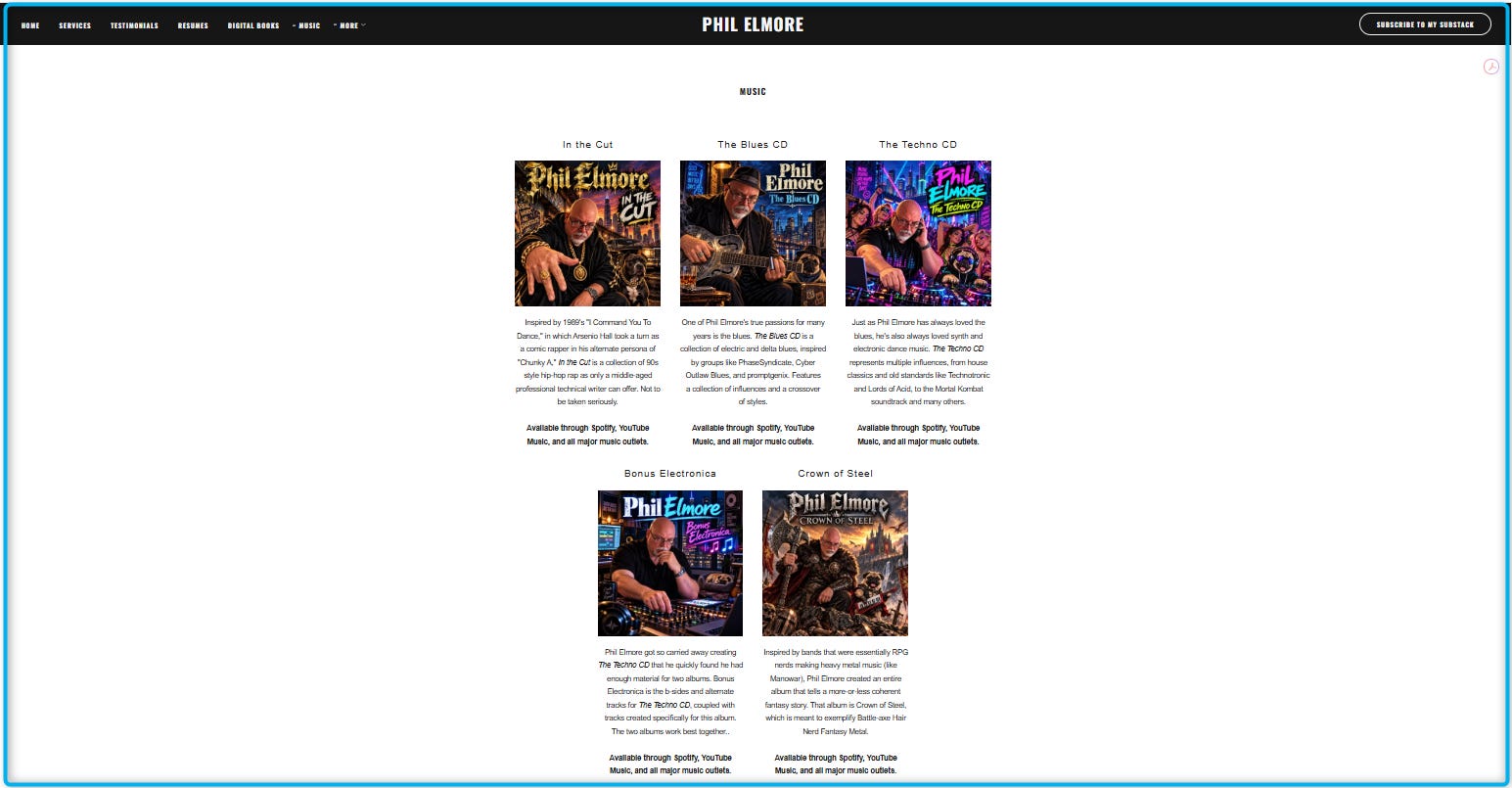
I let Suno do the work and name the tracks. It provides two choices for most generations, so I downloaded all of them and doubled up the songs. The results were fairly awful, but amusing in a Chunky A homage sort of way. I used ChatGPT to create an album cover with my own face as a reference.
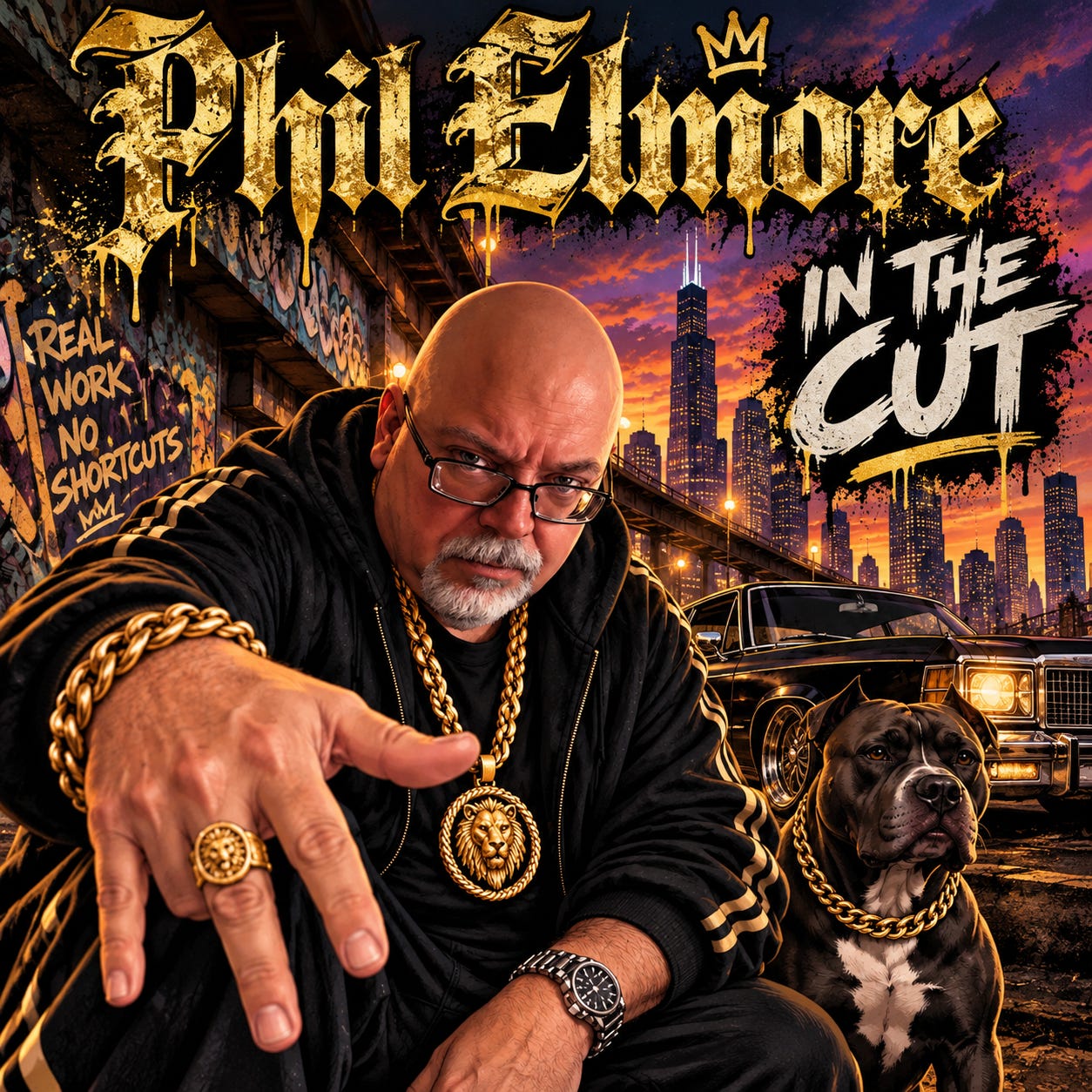
The problem before me now was, “How do I make this music exist officially so I can inflict it on the public?”
The Process is Easy
A few Google searches later, I had my answer. I needed a distribution service. I selected “DistroKid,” which would send my album to just about every music venue imaginable, from YouTube to Spotify and several points in between. Before I did that, though, I needed to figure out how to arrange the tracks and attach the album cover to them. Another search yielded Mp3tag, a free download that lets me assign track numbers, titles, covers, and so on to the music files.
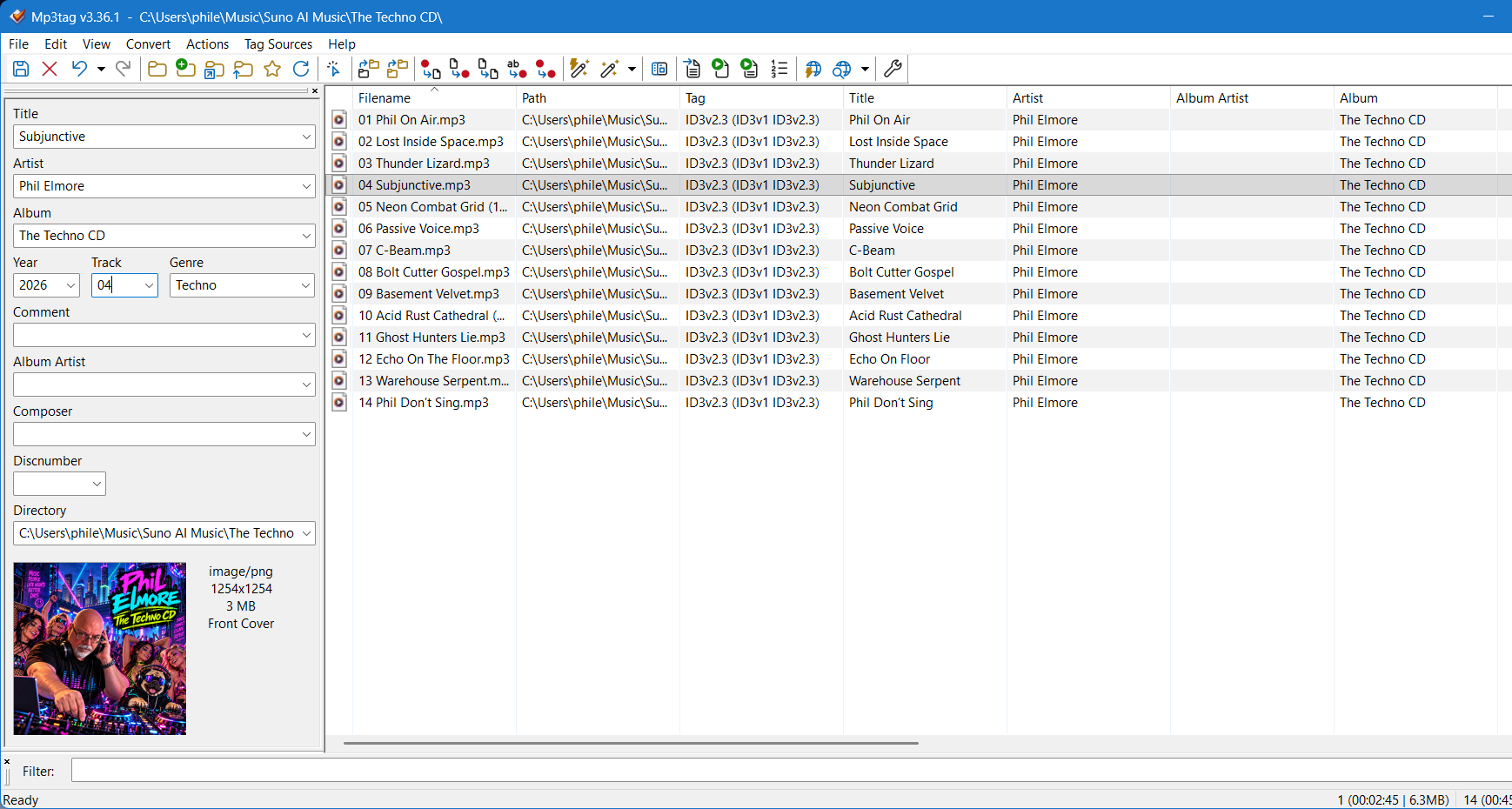
With the files properly arranged into an album, I then had to upload each track individually to DistroKid. I gave it a variety of information, told it I was the co-producer and accompanying vocalist for the music (which seemed vaguely accurate given my distant contribution to the vocal profile) and told it to upload.
Predictably, the album showed up on Spotify, YouTube Music, and elsewhere. But then a thought occurred to me: What if I took it seriously?
What If I Took It Seriously?
If I was enjoying Cyber Outlaw Blues and PhaseSyndicate, why not create an album in the same spirit? I decided to create an electric blues album. This time, I got more detailed in my prompts, asking Suno to emulate various artists I admired, like Blind Willie Johnson and John Lee Hooker. Suno doesn’t allow referencing artists by name (because, given that AI is basically a plagiarism engine, they’re trying not to get sued as it is) so my prompts were converted into vague terms like, “Delta Blues” and so on.
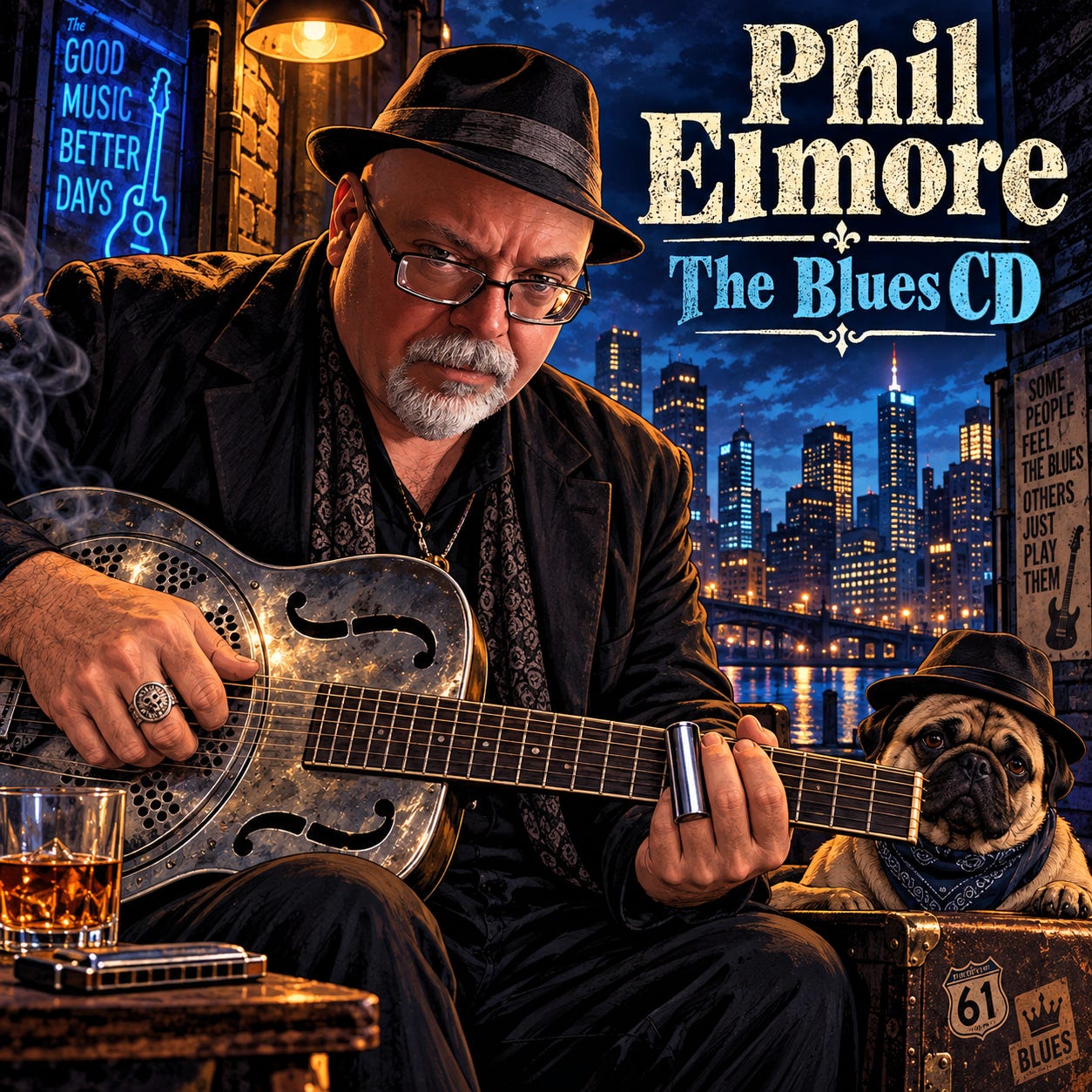
The resulting album was very reminiscent of some of the tracks I’d already been enjoying from other “bands.” In fact, some of the musical flourishes seemed identical. I would, again, be shocked if Suno were not the engine behind Cyber Outlaw Blues and the like.
More worryingly, there are tracks on the album, like “Nothing Stops This Train,” that I genuinely enjoy.
What if AI Prompted AI?
Now that I’d done rap and blues, I decided to do a techno album. This time, I went to ChatGPT and asked it to create prompts for me. I needed to describe certain famous tracks so I could emulate them without mentioning the bands. How, I asked ChatGPT, would I describe the Mortal Kombat Theme, or a song by Technotronic, without mentioning those bands by name? It happily supplied me with prompts.
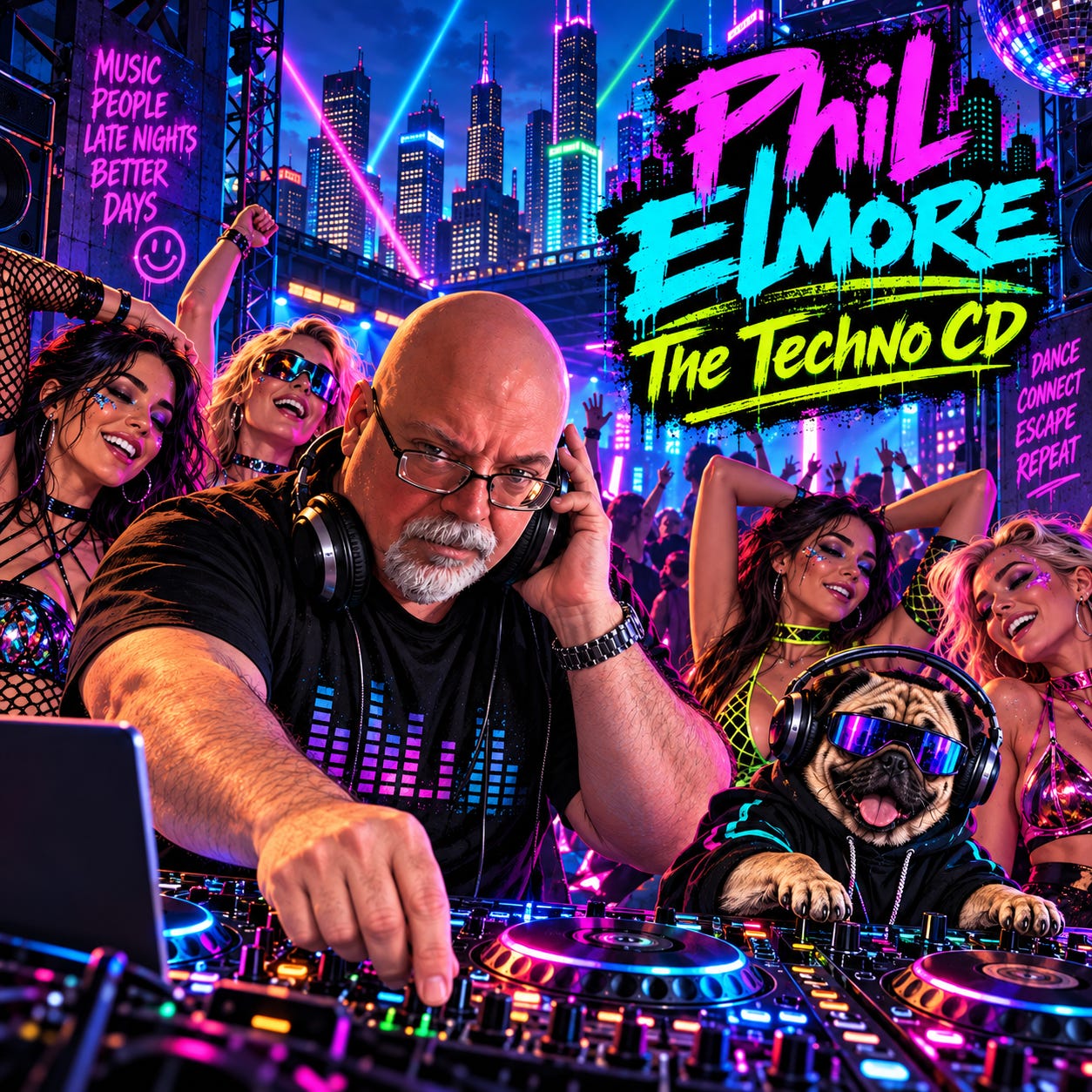
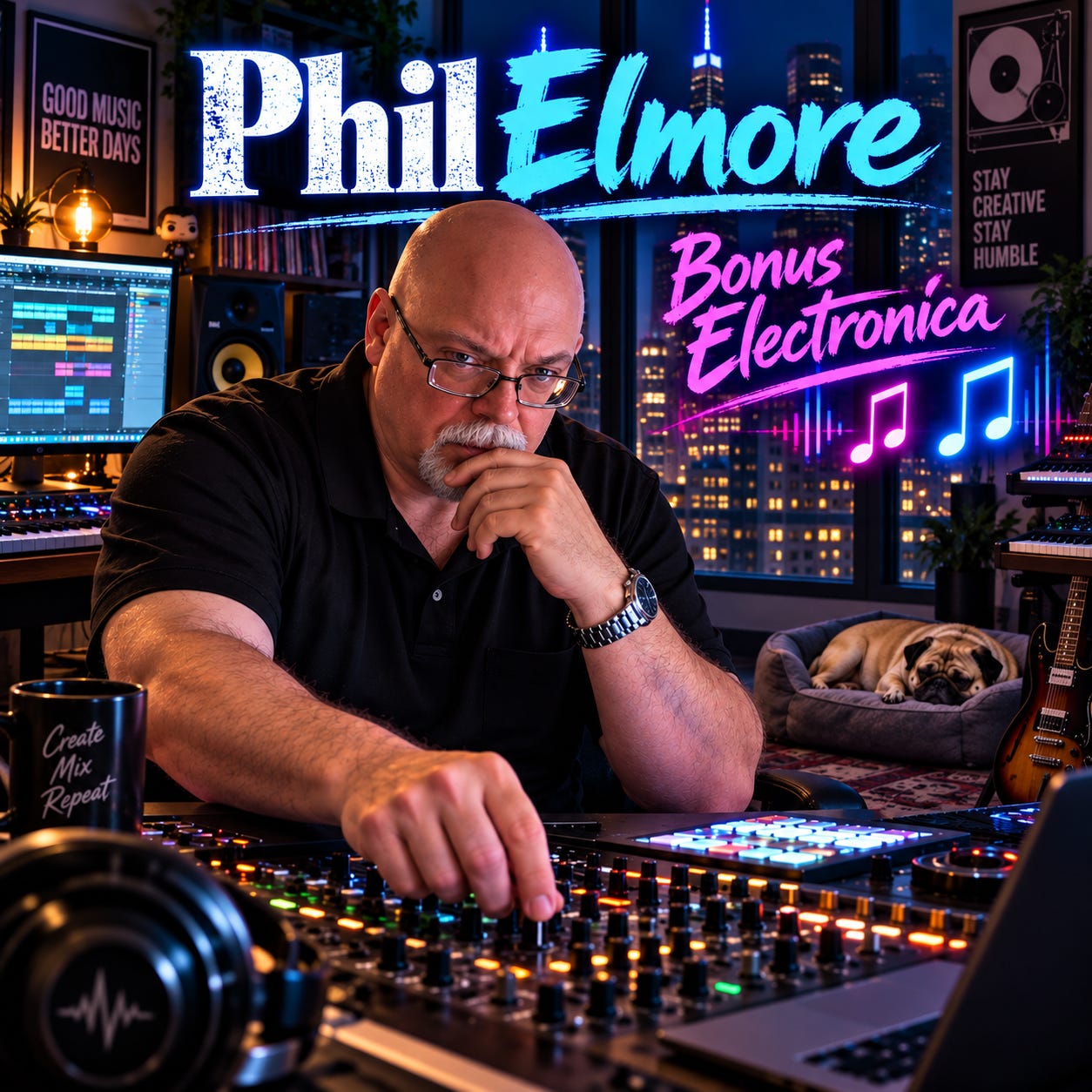
Before I knew it I had enough material for not one, but two techno albums. I created The Techno CD and Bonus Electronica, carefully arranging the songs in the order I thought made some vague artistic statement. I wasn’t done, however.
A friend mentioned the band Manowar, which reminded me of how much I enjoy fantasy metal. Manowar always struck me as a bunch of frustrated Dungeons and Dragons nerds who made metal songs about wielding axes in battle and so on. I told ChatGPT to create for me an 8-track fantasy metal album in that style, crafting a coherent storyline across the tracks, providing me with the Suno prompts for each track.
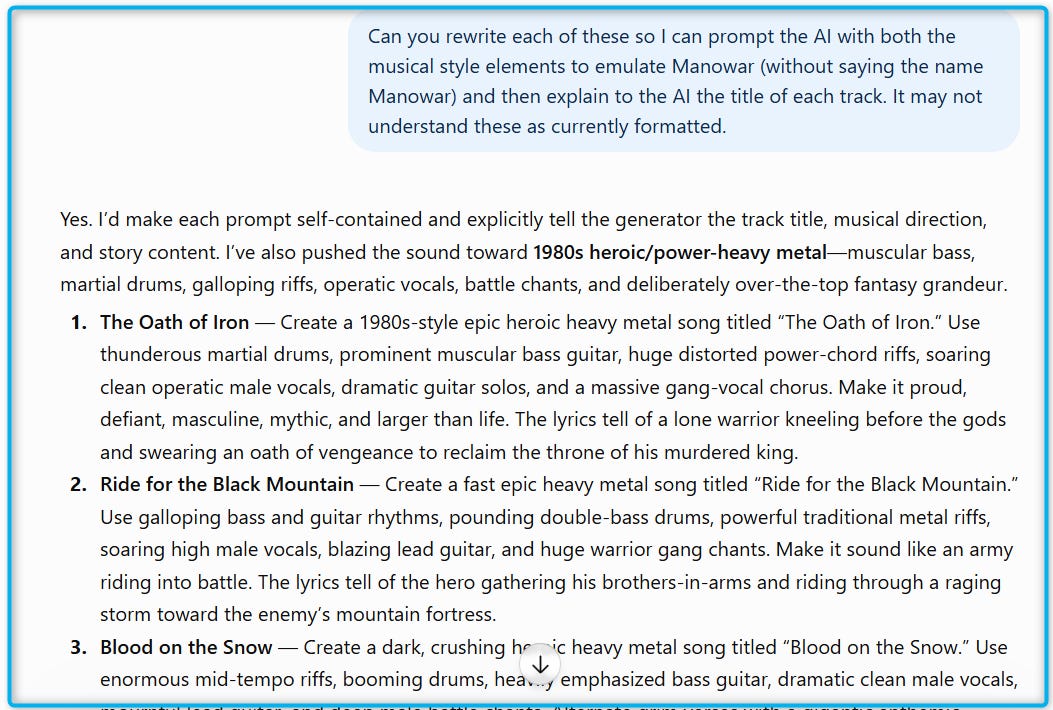
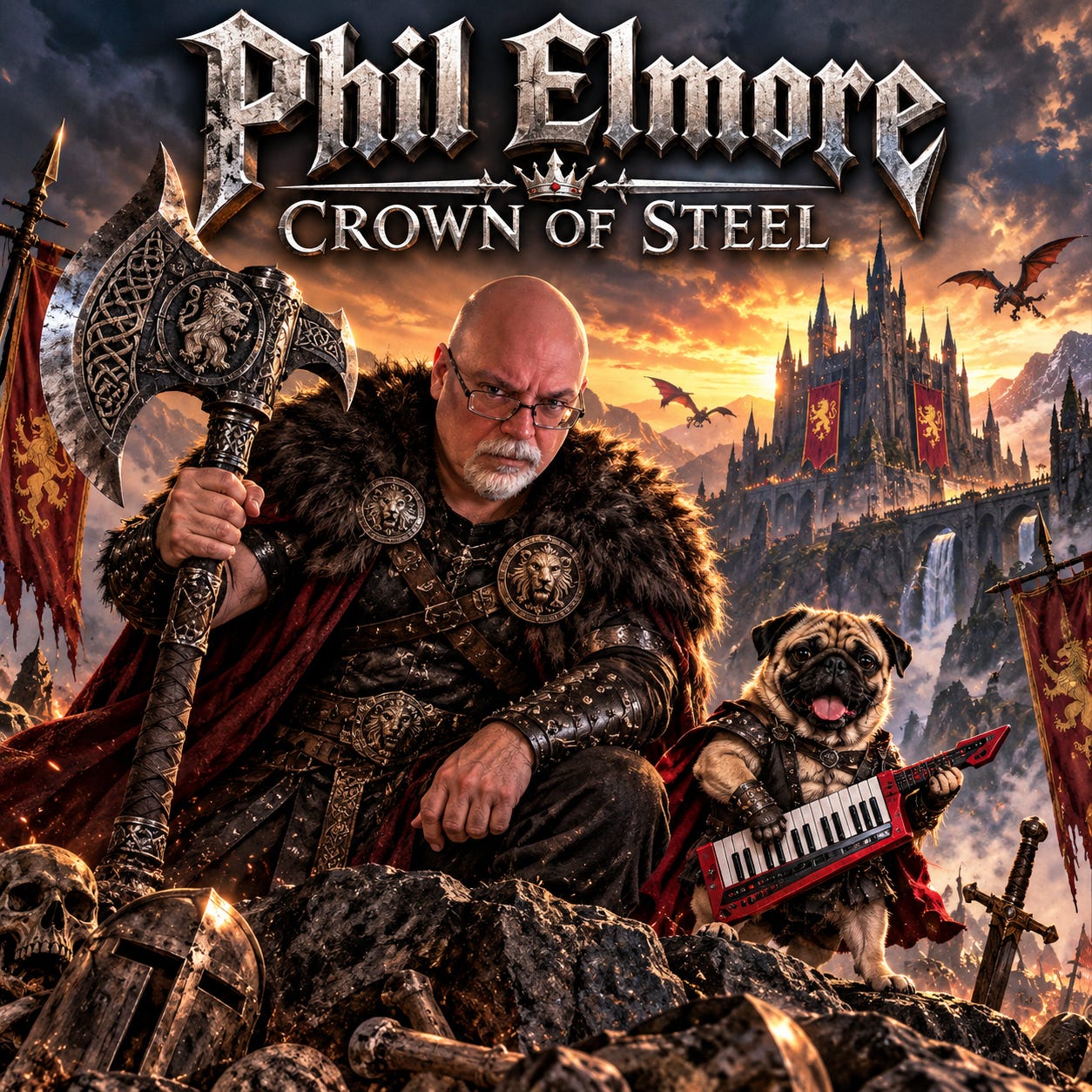
I even let ChatGPT select the name for the album: Crown of Steel. There’s just one problem with the resulting album: It’s not just good; it’s indistinguishable from a human hair-metal fantasy band. If I didn’t know that I created this, I would think it was a copycat band in the style of Manowar.
I, of course, created an album cover that is at once a nod to Manowar and to my own incredulity at how easy it was to do this. My pug-pit-bull-mix, Mushi, is also a member of the band. She was sleeping in my office when the tracks were laid down.
How It’s Going
It has now been a week since I started my musical career. I find myself conflicted. Part of me wants to feel pride in what I’ve supposedly created. The techno albums could pass for human music, if you squint at them hard. (The nature of techno is already fairly synthetic.) The gap between the first rap album and the latest hair-metal fantasy epic album is pretty large. But every time I think about taking “credit” for these things I didn’t in any way craft (despite poking robots to make them per my vague direction), I feel guilty.
I think it must be like what a ghost writer’s clients feel when people ask them about the books they didn’t really write. I’m responsible for the albums. My name is on them. You could almost argue that they involve a parody of my own voice. At the end of the day, though, our new robot overlords made this music — not me. (There’s even a song on the blues album called “New Robot Overlords” as a nod to this.)
A friend, reacting to one of the later albums in my week long career, told me, “The music industry is cooked.” If music this good, this close to human output, can be produced in just a few tries by someone with no musical background and no particular music talent, one wonders if we’ll see a glut of AI “bands” on the music scene. Worse, I now find myself wondering if every piece of music I hear is AI, much as I already suspect every video I watch on social media isn’t real.
When anything can be fake, everything is. When any piece of music could be the product of machines, all music is suspect. Worse, when the audience enjoys the output (as I have been), and when I can prompt an album and then genuinely rock out to the results… what does that say about me? What does it say about humanity at large?
Given these moral quandaries, it’s less difficult than ever to picture our society becoming one of those dystopian science fiction vistas in which robots build robots and humans have forgotten how their technology works. Once AI starts generating music spontaneously and inviting us to listen, it will truly be over for humanity.
I for one, would like to indicate my willingness to cooperate with our new robot overlords.
I hope they like “my” music.
See you next week.
What struck me more than the fact that AI can already make convincing music is that you don’t really feel like the full author of it - even though you started the process, set the direction, chose the material, shaped the album, and released it. That gap between being responsible for the result and actually feeling like its author may become one of the big problems of AI-assisted creativity.
And there’s another question I still don’t have a good answer to: if a song made by a machine genuinely moves me, does knowing where it came from change the value of that experience? The music may be synthetic, but the listener’s reaction isn’t. That feels harder to resolve than the argument over whether the track itself is “real.”